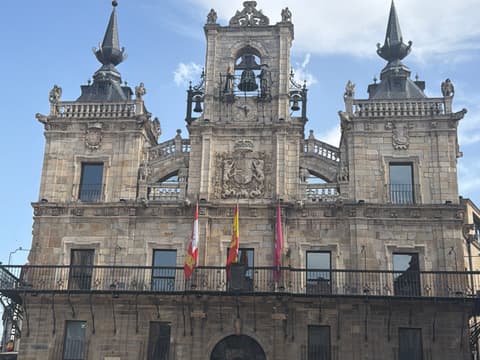
Astorga sits in the province of Leon at the foothills of the mountains that separate the meseta from El Bierzo and Galicia beyond. It is among the oldest continuously inhabited cities on the Camino Frances and the junction of two great pilgrim routes: the Camino Frances coming from the east and the Via de la Plata coming up from Seville in the south. The Camino enters Astorga across the medieval bridge at San Justo de la Vega, climbs the hill, and runs through the heart of the old walled city.
The city was founded by the Romans in 14 BCE as Asturica Augusta, a military camp established by the future emperor Augustus during his campaigns against the Astures, the Celtic-Iberian peoples who held the surrounding mountains. The city became the regional capital of the Roman province and the starting point of multiple Roman roads, including the Via de la Plata to the south and the Via Aquitana east through Hospital de Orbigo. Substantial Roman remains survive, including stretches of the original walls (later rebuilt in medieval form) and an excavated Roman house with surviving mosaics. The city became an episcopal see by the 3rd century, one of the oldest dioceses in Spain, and has been a centre of Christian Iberia for nearly two thousand years.
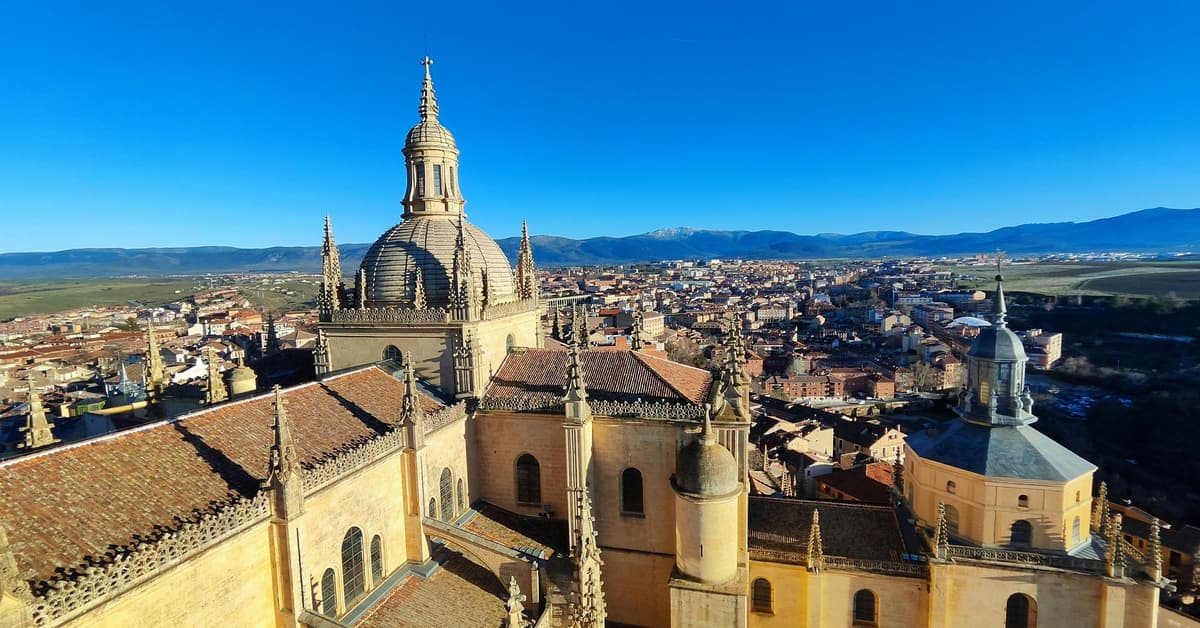
The cathedral of Santa Maria, begun in the late Gothic period in the 15th century and finished in the Baroque era, dominates the old town. Beside it stands the neo-Gothic Palacio Episcopal, the work of Antoni Gaudi, commissioned in the 1880s by Bishop Joan Bautista Grau, a fellow Catalan and Gaudi's friend from their hometown of Reus. It stands as a rare Gaudi commission outside Catalonia and now houses the Museo de los Caminos, the museum of the pilgrimage to Santiago. Astorga is also the cultural heart of the Maragato community, an ethnic group of disputed origin who held a monopoly on muleteer trade between Galicia and Madrid for centuries and developed their own distinctive cuisine, dress, and traditions.
Astorga has the full range of city services. Pilgrims will find the Albergue de Peregrinos Siervas de Maria, the parish-run Albergue San Javier, and private albergues, plus hotels, hostales, restaurants, cafes, bars, supermarkets, pharmacies, ATMs, medical care, and a bus and train station with regional connections.