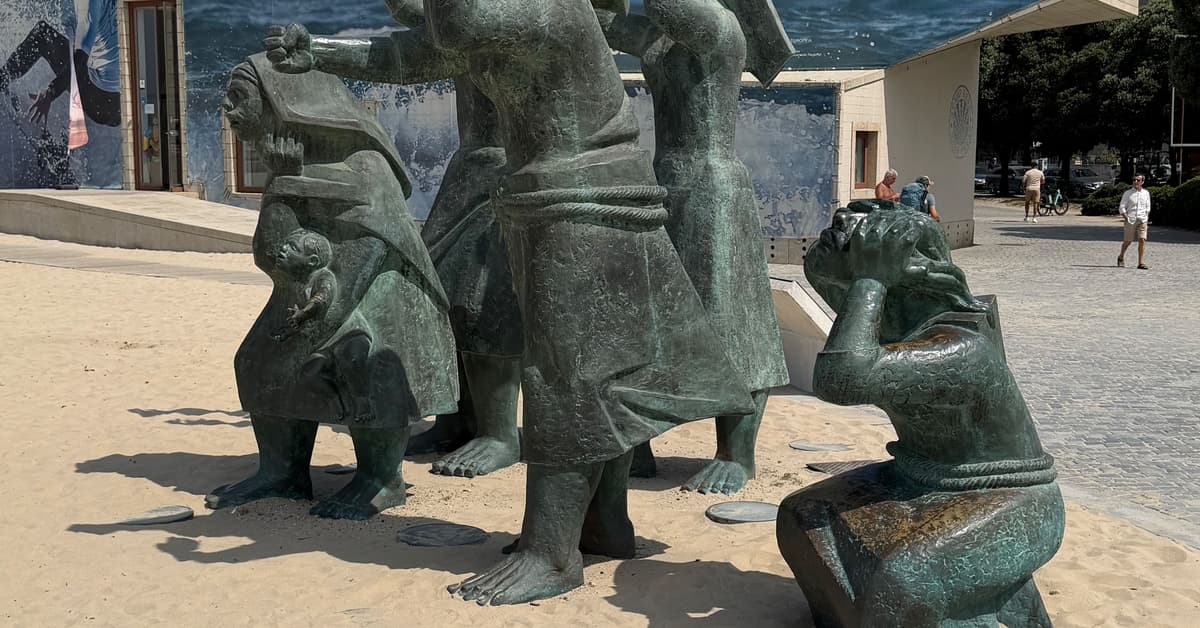
A busy fishing port and seaside town on the northern edge of Porto, known for its fresh grilled seafood restaurants along Rua Herois de Franca. The first coastal town pilgrims encounter heading north.
Matosinhos sits at the point where the Leça River meets the Atlantic Ocean, about ten kilometres north of central Porto. Its name likely derives from the early Portuguese word for brushwood or small shrubs, "mato," reflecting the wild coastal vegetation that originally covered the shoreline before heavy development took hold.
For pilgrims on the Portuguese Coastal Way, this city holds an extraordinary place in the lore of the trail. According to medieval tradition, the universal symbol of the Camino, the scallop shell, originates on these exact shores. The legend claims that a Roman knight named Cayo Carpo was riding his horse on the beach during his wedding festivities when a miraculous ship passed offshore bearing the body of Saint James. The horse plunged into the waves and emerged completely covered in scallop shells. This story cemented the shell as the emblem of Saint James and his pilgrims.
While the beach is the site of that ancient legend, the modern character of Matosinhos took form in the late nineteenth century with the construction of the Port of Leixões. This massive infrastructure project created one of the largest artificial harbours on the Iberian Peninsula and transformed the town into an industrial hub. By the twentieth century, Matosinhos supported dozens of fish canneries processing the sardines and mackerel brought in by its fleet. Today, the canneries are mostly gone, but if you look closely while walking the streets behind the port, you can still spot their industrial silhouettes and tiled facades repurposed into residential and commercial spaces.
The fishing culture remains highly tangible. The harbour is active, and the stretch of restaurants along Rua Heróis de França near the port is widely considered one of the best places in Portugal to eat grilled fish. Whole sea bass and dourada cooked over charcoal are the local speciality, served simply and in large portions. The area gets busy at lunchtime, and the street fills with the thick smoke of outdoor grills. Arriving early allows you to secure a table and watch the chefs expertly manage the coals before the crowds descend.
Away from the water, the Church of Bom Jesus de Matosinhos warrants a detour. The eighteenth-century church features prominent baroque touches by Nicolau Nasoni, the Italian architect responsible for much of Porto's iconic skyline. Inside, the main altar holds a celebrated wooden carving of Christ that has drawn its own local pilgrimage for centuries. The spot where this wooden image is said to have washed ashore in 1500 is marked by the Senhor do Padrão, a domed stone shrine standing right on the beachfront.
For those interested in modern design, a walk across the bascule bridge over the Leça River leads into Leça da Palmeira. Here, you can find the early masterworks of Pritzker Prize-winning architect Álvaro Siza Vieira, including the ocean-facing Boa Nova Tea House and the tidal swimming pools built directly into the rocky shore, which integrate seamlessly with the rugged Atlantic coast. Back on the Matosinhos side, the South Cruise Terminal at the Port of Leixões stands out as a distinctive contemporary building resembling an unwinding ribbon, representing the latest chapter in a city that has always looked to the ocean.
Praia de Matosinhos offers a long, wide expanse of sand bordered by a flat pedestrian promenade. The city is connected directly to Porto by a metro line, which makes it a highly practical alternative starting point for the Coastal Way. Because the route out of central Porto involves navigating dense urban and industrial zones, many walkers choose to take the metro to Matosinhos and begin their journey on foot here, where the trail finally meets the sea.
Every kind of bed in one place: online booking, direct-contact albergues, walk-ins and donativos. Live prices for your night.
The Camino through town, with prices where the beds are. Amber is the route; each pin is a place to stay.
Short, practical advice from people who have walked through Matosinhos.
No tips yet for Matosinhos
Walked through here? A line about where to eat, what to see or what to watch out for helps the next pilgrim.
How to reach your starting point from major cities and airports.
Porto is well connected by train to cities across Portugal, including Lisbon, Coimbra, Aveiro and Braga. Arrive at Porto-Campanhã or São Bento station, then take the Porto Metro to Matosinhos. Line A (blue) runs towards the coast, with stops including Matosinhos Sul, close to the beaches and town centre.
The nearest airport is Francisco Sá Carneiro Airport (OPO), serving Porto and the surrounding region. From the airport, Matosinhos is approximately a 15 to 25-minute drive, depending on traffic. From the airport there are taxis, ride-hailing services, metro or public transport available to complete your journey
Several STCP bus routes connect Porto with Matosinhos. The 500 runs from Praça da Liberdade to Matosinhos Market, the 501 connects Aliados with Matosinhos Beach, and the 502 runs from Bolhão to Matosinhos Market.
A taxi or ride-hailing service such as Uber or Bolt is a convenient way to reach Matosinhos from Porto. The journey from the city centre typically takes around 15 to 25 minutes, depending on traffic, and costs approximately €12 to €20. From Porto Airport, expect a similar journey time and an estimated fare of €15 to €25. Prices vary with traffic, demand and your exact destination.
Our Koala Picks first, then donativos, albergues and hostels, hotels, and everything else. Within each group the best-reviewed places lead.
Loading places to stay…
