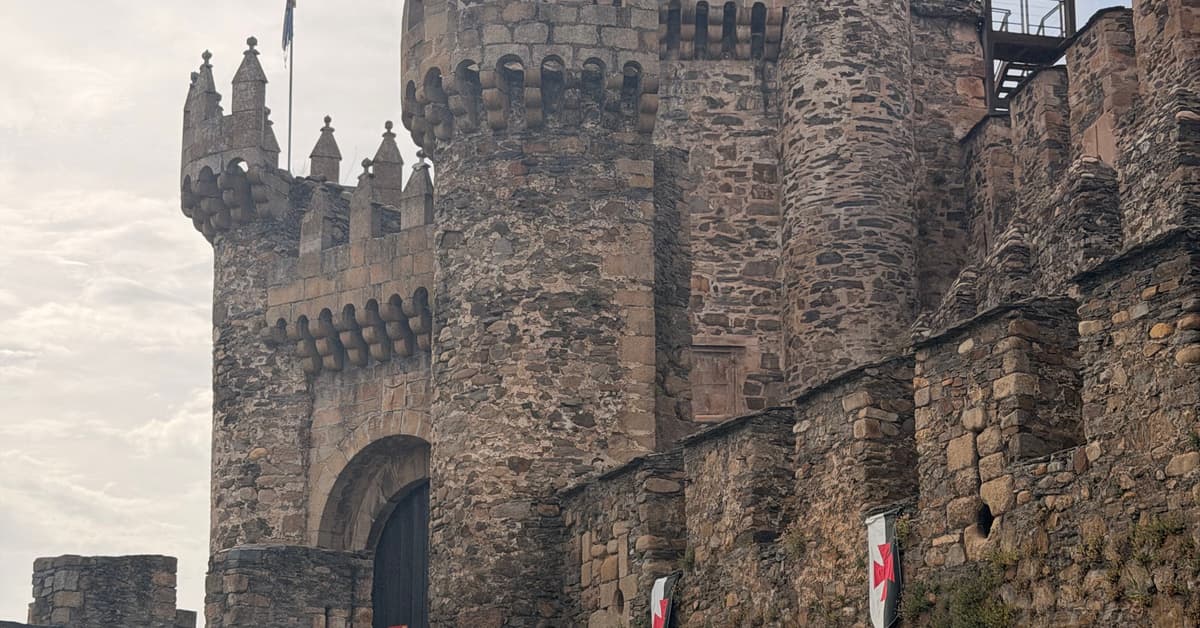
Ponferrada sits in the province of Leon at the confluence of the rivers Sil and Boeza, in the heart of the El Bierzo region. It is the largest city in El Bierzo and a major stop on the Camino Frances west of Leon. The Camino enters Ponferrada from Molinaseca, crosses the old town, and continues west toward Cacabelos and Villafranca del Bierzo. The Templar Castle dominates the skyline of the old town from the heights above the Sil.
The city's name comes from the Latin Pons Ferrata, meaning iron-bridged. The original bridge was a Roman crossing of the Sil that was reinforced with iron in the 11th century by Bishop Osmundo of Astorga, specifically to protect pilgrims travelling to Santiago. The city's most famous building is the Castillo de los Templarios, established in the 12th century when the Knights Templar received the territory from the Kingdom of Leon as a base from which to protect pilgrims crossing into El Bierzo. The castle was expanded substantially in the 12th and 13th centuries and ranks among the more extensive surviving Templar fortresses in western Europe. The Templars held Ponferrada until the suppression of the order in 1312, after which the castle passed through royal and aristocratic hands before being progressively restored from the 20th century onward. The Basilica de la Virgen de la Encina, the city's principal church, is named for a Marian image traditionally discovered hidden inside an oak (encina) by Templars clearing the land for the castle. The basilica has been the religious heart of El Bierzo since the 16th century.
Ponferrada has the full range of city services. Pilgrims will find the Albergue Municipal San Nicolas de Flue (a large municipal albergue) and private albergues, plus hotels, hostales, restaurants, cafes, bars, supermarkets, pharmacies, ATMs, hospitals, and a bus and train station with connections across northern Spain.
Beyond the castle and basilica, the old town of Ponferrada is worth time. The Plaza del Ayuntamiento, the Torre del Reloj clock tower, the museum of El Bierzo, the Museo del Ferrocarril (railway museum), and the riverside walks beside the Sil all reward a slower visit.