Town

Villaviciosa

8m
43.4814°N, 5.4345°W

Coordinates

43.4814°N, 5.4345°W

Elevation

8m

Accommodation

Available

Services Available

Accommodation
Restaurant
Cafe
Grocery
Pharmacy
ATM
Train
Post Office
Airport
Bus
Pilgrim Office
Clinic
Water
Tobacconist

About Villaviciosa

Villaviciosa is the cider capital of Asturias, set in a lush valley surrounded by apple orchards. The town and its surroundings produce much of Asturias' famous natural cider, and the sidrerias here are among the best in the region.

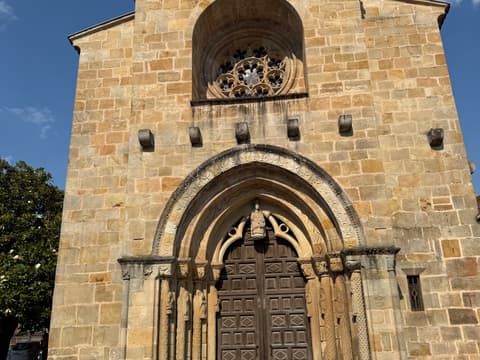
Pilgrims will find albergues, hotels, restaurants, cafes, supermarkets, ATMs, and a pharmacy. The Romanesque Church of Santa Maria de la Oliva in the town centre is notable. Nearby, the Monastery of Valdedios is a detour-worthy Romanesque gem.

Historically, Villaviciosa is where Emperor Charles V first set foot in Spain in 1517 when he arrived from Flanders to claim his throne.

Explore Villaviciosa

Things to Do in Villaviciosa

Food & Drink

Drink Cider in a Sidreria

Villaviciosa is the capital of Asturian cider. The town has numerous sidrerias (cider houses) where the ritual of cider pouring is practiced with pride and skill. The waiter holds the bottle above their head and pours into a glass held at waist height, aerating the cider to create a brief effervescence. You drink the glass in one or two gulps and hand it back for another pour. The cider is dry, tart, and refreshing. In Villaviciosa, this is not a tourist performance. It is how people drink.

History

Visit the Iglesia de Santa Maria de la Oliva

One of the finest Romanesque-transitional churches in Asturias, dating from the 13th century. The carved western portal is the highlight, with detailed stone figures and decorative arching. The interior is simple and elegant. The church sits in the old town and is easy to find. For a relatively small town, the quality of the architecture is impressive and reflects the historical importance of Villaviciosa as a trading and religious centre.

Relaxation

Walk the Estuary

The Ria de Villaviciosa is the largest estuary in Asturias and a protected natural area. The wetlands, mudflats, and salt marshes support a rich diversity of birdlife, including herons, egrets, and wading birds. Walking paths along the estuary offer views across the water to the green hills beyond. The estuary is peaceful and beautiful, a welcome contrast to the road walking that can characterise some stages of the Norte.

History

Visit the Iglesia de San Salvador de Valdedios

A short detour from the Camino (about 6 km south of Villaviciosa) leads to the Iglesia de San Salvador de Valdedios, a 9th-century pre-Romanesque church that is one of the most important religious buildings in Asturias. Known as "El Conventín," the church was built by King Alfonso III in 893 AD. The pre-Romanesque architecture of Asturias is a UNESCO World Heritage treasure, and Valdedios is one of the finest examples. The nearby Cistercian monastery adds to the site's atmosphere.

Camino Moment

Choose Your Route

Villaviciosa is where the Camino del Norte and the Camino Primitivo diverge. Continuing north to Gijon keeps you on the coastal route through Asturias and into Galicia. Turning south to Oviedo puts you on the Primitivo, crossing the mountains of western Asturias to Lugo and then to Santiago. The Norte is longer but stays near the sea. The Primitivo is shorter, harder, and passes through some of the most remote and beautiful mountain landscapes in Spain. Both are magnificent. This is a significan

Accommodation in Villaviciosa

Where You Are on the Camino

You are here

Villaviciosa

377 km to Santiago de Compostela

Part of

ColungaVillaviciosa(Previous Stage)
View stage
VillaviciosaGijón / Xixón(Next Stage)
View stage