CAMINO KOALA
AccommodationGear
/
Log in
Build my Camino
/
CAMINO KOALA

Your trusted guide to walking the Camino de Santiago. Plan your stages, find accommodation, and prepare for the journey of a lifetime.

Explore

  • All Routes
  • Camino Francés
  • Camino del Norte
  • Camino Portugués
  • Le Chemin du Puy

Plan

  • Essential Info
  • Gear Guide
  • When to Go
  • Budget Planning
  • Frequently Asked Questions

Community

  • Pilgrim Stories
  • About Us
  • Contact
Built with by pilgrims, for pilgrims
Privacy PolicyTerms of ServiceAffiliate DisclosureDelete Account
© 2026 Camino Koala
HomeCamino FrancésLeon Villadangos Del PramoLeon
CityCastilla y Leon / Meseta306 km to Santiago de Compostela

Leon

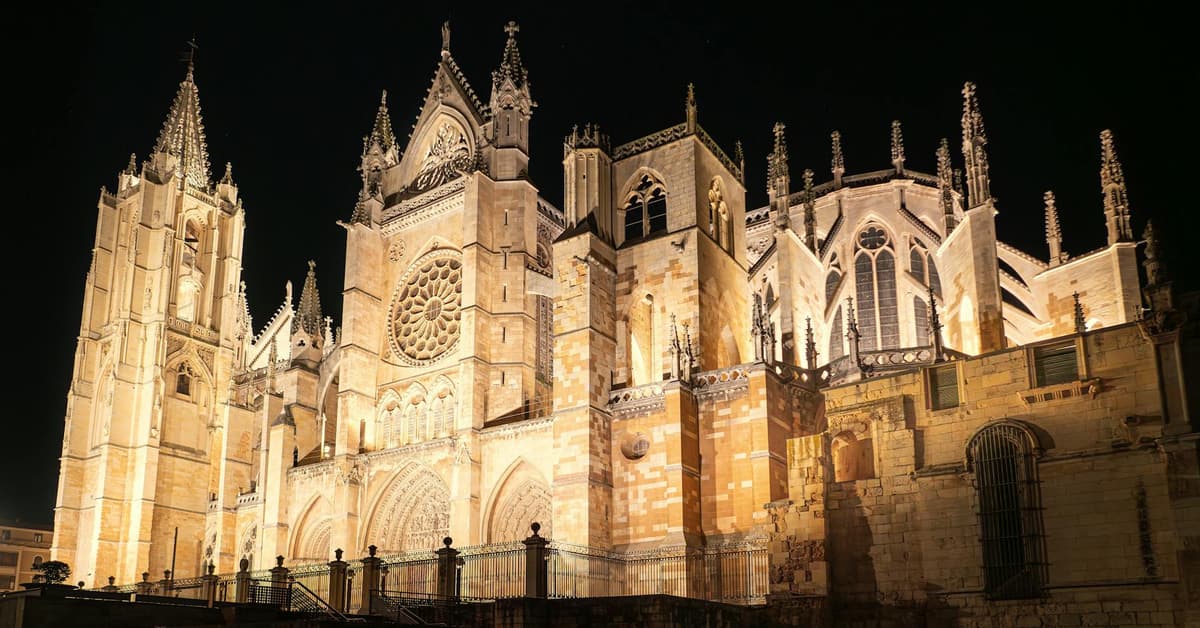
Leon is a Roman-founded city in northwest Spain and the medieval capital of the Kingdom of Leon. Famous for its French Gothic cathedral, the Romanesque Pantheon of Kings at San Isidoro, and the parador hotel at San Marcos. Has full city services.

View accommodationPlan your arrivalStart my Camino here
AboutWhere to stayExploreThings to doGetting hereArrival dayPractical infoFind a bed
Services available
AccommodationRestaurantCafeGroceryPharmacyATMTrainPost OfficeAirportBusPilgrim OfficeClinicWaterTobacconist
About Leon

Leon is the capital of the province of Leon, in the northwest of Spain. It was founded as a Roman military camp in the 1st century BCE for the Legio VI Victrix and later occupied by the Legio VII Gemina, the Twin Seventh Legion. The name Leon comes directly from the Latin legio: this was always a city of soldiers. Roman walls, in much-reworked form, still trace the boundary of the old city centre. The Camino Frances enters Leon through the eastern suburbs and runs through the heart of the medieval quarter.

After the Roman period, Leon rose to become the capital of the medieval Kingdom of Leon, a Christian kingdom that played a leading role in the Reconquista against Moorish rule. The kingdom was at its height in the 10th and 11th centuries, and the city's principal monuments date from this period and the centuries that followed. The Real Colegiata de San Isidoro, built in the 11th century by King Ferdinand I and Queen Sancha, houses the Pantheon of Kings, a Romanesque royal mausoleum whose ceiling frescoes have been called the Sistine Chapel of Romanesque art. The cathedral, begun in the 13th century, is a French Gothic building nicknamed the Pulchra Leonina, the Beautiful Leonese, famous for around 1,800 square metres of stained glass that floods the interior with coloured light at almost any hour. The monastery of San Marcos, originally a pilgrim hospital founded by Queen Sancha in the 12th century, was rebuilt in the 16th century in elaborate Plateresque style and now operates as a luxury parador hotel. Casa Botines, by Antoni Gaudi, sits in the Plaza de San Marcelo and was an early commission for the Catalan architect outside Catalonia; it now functions as a museum.

Leon has the full range of city services. Pilgrims will find the Albergue Municipal de Leon and the Albergue de las Carbajalas, run by Benedictine sisters, both close to the cathedral, alongside private albergues, pensions, hotels, and hostels at every price point. The city has restaurants, cafes, bars, supermarkets, pharmacies, ATMs, hospitals, medical care, and a railway and bus station with connections to Madrid, the Galicia coast, and northern Spain.

Leon is the only city between Burgos and Santiago that earns a full rest day. The Barrio Humedo, the tangle of streets south of the cathedral, is the city's tapas district and where the city comes alive in the evening.

Quick info
Coordinates42.5991°N, 5.5700°WPopulation116,418Elevation840 mRegionCastilla y Leon / MesetaRemaining306 kmAccommodation47 places
View accommodation
Where you are on the Camino
306 kmto Santiago de Compostela
Saint Jean Pied de Port60% walkedSantiago de Compostela
Previous StageMansilla de las Mulas → LeonCamino FrancésNext StageLeon → Villadangos del PáramoCamino Francés
Where to stay

Beds in Leon, night by night

Every kind of bed in one place: online booking, direct-contact albergues, walk-ins and donativos. Live prices for your night.

October 15 to October 28Each night shows how many places you can book online and the lowest price. Select a night to see the detail.
Swipe for more nights
Thursday, October 15Albergue dorms and private rooms both count. Walk-in and donativo albergues never sell out online: arrive early in the day instead.
Prices come live from our booking partners and change with demand. Walk-in and donativo albergues are not counted here: they are in the full list at the bottom of the page.
Explore

Explore Leon

The Camino through town, with prices where the beds are. Amber is the route; each pin is a place to stay.

Select a pin to highlight the property.
Things to do

Things to do in Leon

7 things
Camino MomentTake a Rest DayLeon is one of the best places on the entire Camino to take a rest day. The city has enough to fill two full days of sightseeing, eating, and relaxing. Your body has been walking for two weeks or more. The mountains of the Cruz de Ferro and O Cebreiro are ahead. A day off here, doing laundry, eating well, and sleeping in, is not a luxury. It is an investment in the weeks to come.
SightVisit the CathedralThe Cathedral of Leon is often called the most beautiful Gothic cathedral in Spain. Its defining feature is the stained glass: over 1,800 square metres of medieval and Renaissance windows that fill the interior with coloured light. On a sunny afternoon, the effect is overwhelming. The building itself is lighter and more delicate than the heavy cathedrals of Burgos or Santiago, deliberately designed to maximise the glass. Allow at least an hour, and try to visit when the sun…
FoodExplore the Barrio HumedoLeon's "Wet Quarter" is one of the best tapas neighbourhoods in Spain. The tradition here is that every drink comes with a free tapa, and the tapas are generous. The narrow streets around the Plaza de San Martin are packed with small bars, each with its own speciality. Order a glass of wine, eat the free tapa, move to the next bar. You can eat a full dinner this way without ever ordering food.
SightVisit the Basilica de San IsidoroOften overshadowed by the cathedral, San Isidoro is extraordinary in its own right. The Royal Pantheon, a crypt beneath the church containing the tombs of the medieval Kings of Leon, has Romanesque ceiling frescoes so vivid and well preserved that it is known as the "Sistine Chapel of Romanesque art." The museum upstairs contains the Chalice of Dona Urraca, which some scholars have controversially identified as the Holy Grail.
SightSee the Casa Botines by GaudiOne of only three buildings that Antoni Gaudi designed outside Catalonia. This neo-Gothic building on the Plaza de San Marcelo was built in 1894 and now houses a museum with a collection of Spanish art from the 19th and 20th centuries. The building itself is the main attraction, with Gaudi's distinctive style visible in the turrets, the ironwork, and the dragon-slaying statue of Saint George above the entrance.
RelaxationWalk Along the Rio BernesgaThe river runs through the western side of the city with tree-lined paths on both banks. After days of Meseta walking, the green shade and sound of water feel luxurious. The park areas near the Puente de San Marcos are popular with locals jogging, walking dogs, and sitting on benches in the evening.
FoodEat Cecina and MorcillaLeon is a food city. The two local specialities to try are cecina (smoked dried beef, sliced thin with olive oil) and morcilla leonesa (Leon-style blood sausage with onions). Both appear on almost every bar menu. Also try botillo del Bierzo if you see it, a cured meat dish from the mountains ahead. The Mercado del Conde Luna, a covered market in the old town, is great for fresh produce and local cheeses.
Getting here

Getting to Leon

How to reach your starting point from major cities and airports.

By train

By Train

Renfe trains from Madrid Chamartin (2 hours via high-speed AVE or Alvia), Barcelona (7 hours), Bilbao (5 hours), and Burgos (2 hours). Leon station is centrally located, about 10 minutes walk from the cathedral.

By trainBy Train

Renfe trains from Madrid Chamartin (2 hours via high-speed AVE or Alvia), Barcelona (7 hours), Bilbao (5 hours), and Burgos (2 hours). Leon station is centrally located, about 10 minutes walk from the cathedral.

By airBy Air

Leon Airport (Virgen del Camino) has very limited flights, mostly domestic. The nearest major airports are Madrid (2 hours by AVE), Bilbao (5 hours), and Asturias (Oviedo, 1.5 hours by bus or train).

By busBy Bus

Alsa runs regular buses from Madrid (3.5 hours), Oviedo (1.5 hours), Bilbao (4.5 hours), and Burgos (2 hours). The bus station is near the city centre.

By taxi or transferBy Taxi / Transfer

Taxis are available from the train and bus stations. Leon is compact and most of the old town is walkable.

Arrival day

What to do on arrival

Your checklist for arrival day in Leon.

Leon's tapas quarter is one of the best in Spain. Many bars still serve a free tapa with every drink. Walk from the Plaza Mayor through the narrow streets. Try cecina (cured beef), a Leon speciality.

All accommodation

Places to stay in Leon

Our Koala Picks first, then donativos, albergues and hostels, hotels, and everything else. Within each group the best-reviewed places lead.

Loading places to stay…

Practical info

Practical information

Everything you need to know for your time in Leon.

Pilgrim Office / Credential

Cathedral or the Albergue Municipal. The local Camino association is active and helpful.

ATM / Banks

Multiple ATMs throughout the city centre, especially around the Cathedral and Plaza Mayor.

Pharmacy (Farmacia)

Several pharmacies in the old town. Standard Spanish hours with siesta break.