Town

Padrón

11m
42.7390°N, 8.6603°W

Coordinates

42.7390°N, 8.6603°W

Elevation

11m

Accommodation

Available

Services Available

Accommodation
Restaurant
Cafe
Grocery
Pharmacy
ATM
Train
Post Office
Airport
Bus
Pilgrim Office
Clinic
Water
Tobacconist

About Padrón

Padron is a historically significant town on the Camino Portugues. According to Jacobean tradition, the stone boat carrying the remains of Saint James arrived here on the Rio Sar, and the mooring stone (padron) is preserved beneath the altar of the Santiago church.

The town is famous throughout Spain for its Padron peppers (pimientos de Padron), a beloved Galician tapa where most are mild but the occasional one is fiery hot. It is also the birthplace of Rosalia de Castro, Galicia's most celebrated poet, whose house is now a museum on the outskirts of town.

Pilgrims will find albergues, hotels, restaurants, supermarkets, pharmacies, and ATMs. The town centre is compact and pleasant, and the riverside walk is a good spot to relax before the final day of walking to Santiago. Padron has a train station with connections to Santiago de Compostela (approximately 20 minutes).

Explore Padrón

town.thingsToDoTitle

History

See the Padron Stone

Beneath the altar of the Igrexa de Santiago (parish church), the stone to which the Apostle James's boat was supposedly moored is preserved. The padron is the founding relic of the entire Camino de Santiago tradition. Without this stone, without this legend, the pilgrimage to Santiago would not exist. The church is modest, but its significance to the Camino is immense. Visit, see the stone, and consider the chain of faith and tradition that has drawn millions of pilgrims to Galicia over twelve c

Food & Drink

Eat Pimientos de Padron

The famous Padron peppers are grown in the fields around the town. Every restaurant serves them, fried in olive oil and sprinkled with coarse sea salt. Most are mild and sweet, but about one in ten is fiery hot. You never know which one will bite back. It is a simple dish, almost absurdly so, but the combination of the crispy skin, the soft flesh, the salt, and the occasional kick of heat is addictive. Order a plate (or two) with a cold beer. You are in the pepper capital of Spain.

Sightseeing

Visit the Casa-Museo de Rosalia de Castro

Rosalia de Castro is the most important literary figure in Galician history. Her house on the outskirts of Padron is now a museum, preserving her personal belongings, manuscripts, and the rooms where she lived and wrote. Castro's poetry, written in Galician at a time when the language was suppressed, was a foundational act of cultural resistance. The museum is a quiet, contemplative place, fitting for a poet who wrote about loss, longing, and the Galician landscape.

History

Walk to the Iria Flavia Church

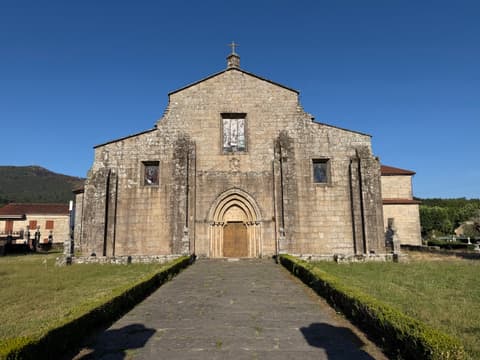
The nearby village of Iria Flavia (now part of greater Padron) has an ancient church associated with Bishop Teodomiro, who recognised the tomb of the Apostle James in the 9th century and set the entire pilgrimage tradition in motion. The Colegiata de Santa Maria de Iria Flavia is an atmospheric Romanesque and Gothic building in a quiet setting. The graveyard contains the tomb of Rosalia de Castro. The connection between the discovery of the tomb, the founding of the pilgrimage, and this small ch

Camino Moment

Your Last Night on the Camino

Tomorrow you walk 20 km to Santiago de Compostela. Tonight is your last night as a walking pilgrim. The emotions vary. Some pilgrims are excited, some are reflective, some are sad that the journey is ending. Eat a good dinner. Drink a glass of wine. Think about where you started and all the days between then and now. Set your alarm early. Many pilgrims like to arrive in Santiago in time for the noon pilgrim mass at the Cathedral. The final stage passes through forest and small villages before th

Accommodation in Padrón

Where You Are on the Camino

You are here

Padrón

25 km to Santiago de Compostela

Part of

Caldas de ReisSan Xulián(This Stage)
View stage
PadrónSantiago de Compostela(Next Stage)
View stage