Located on the church square in La Espina, Albergue El Texu serves pilgrims walking the Camino Primitivo. Named after the Asturian word for the yew tree, this modest hostel provides standard amenities and a quiet place for walkers to recover.
Private Albergue
Taking its name from the Asturian word for the yew tree, Albergue El Texu sits directly on the church square in the village of La Espina. The yew is a deeply significant tree in Asturias, often planted next to rural churches centuries ago. These ancient trees provided a sheltered meeting place for village councils and served as a pre-Christian symbol of eternal life that was later adopted by the church.
La Espina has a long history as a critical crossroads on the Camino Primitivo, the original route to Santiago de Compostela first walked by King Alfonso II in the ninth century. Because the village sits at a geographic junction connecting the Asturian coast with the mountainous interior, it has hosted weary travelers for hundreds of years. Historical records indicate La Espina once operated a dedicated pilgrim hospital to shelter those making the arduous trek through the local mountain passes. Today, Albergue El Texu continues that long tradition of hospitality as a privately operated hostel designed specifically for modern walkers and cyclists.
The facility provides a welcome recovery spot after the demanding climb up the valley from Salas. Inside, the sleeping quarters are set up with pilgrim comfort in mind. The property includes a well-equipped communal kitchen where travelers can prepare their own meals, a shared dining area, and a garden terrace. Practical amenities like a washing machine, a dryer, reliable heating for cold mountain nights, and secure bicycle storage make it a highly functional stop.
A surprising historical detail about the region's famous yew trees is their toxicity. Nearly every part of the tree is poisonous, which historically served a practical purpose by keeping hungry livestock from grazing in sacred churchyards. At the same time, the wood is incredibly flexible and strong, making it highly prized by ancient warriors for crafting longbows.
For those planning to stay, arriving early or booking ahead during the busy summer months is a smart move. The limited beds fill up quickly with pilgrims eager to rest after ascending the valley. It is highly recommended to use the outdoor terrace to air out and dry gear on sunny afternoons. Before leaving the next morning, take a quick walk around the adjacent church to look for the village yew tree and appreciate the quiet history of this mountain crossroads.
Compare the rest of the places to stay in La Espina on the map.
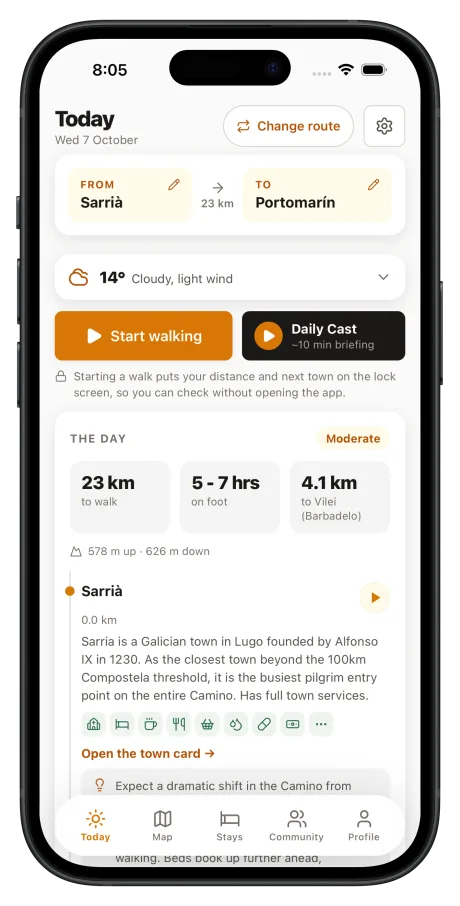
Your saved Camino opens in the app with every town, date and stay exactly as you left it, and keeps working when the signal does not.