Positioned directly along the Camino del Norte in Soto de Luiña, this family-run hotel offers comfortable rooms with private balconies. An on-site sidrería serves hearty Asturian cuisine, making it a convenient overnight rest stop for pilgrims.
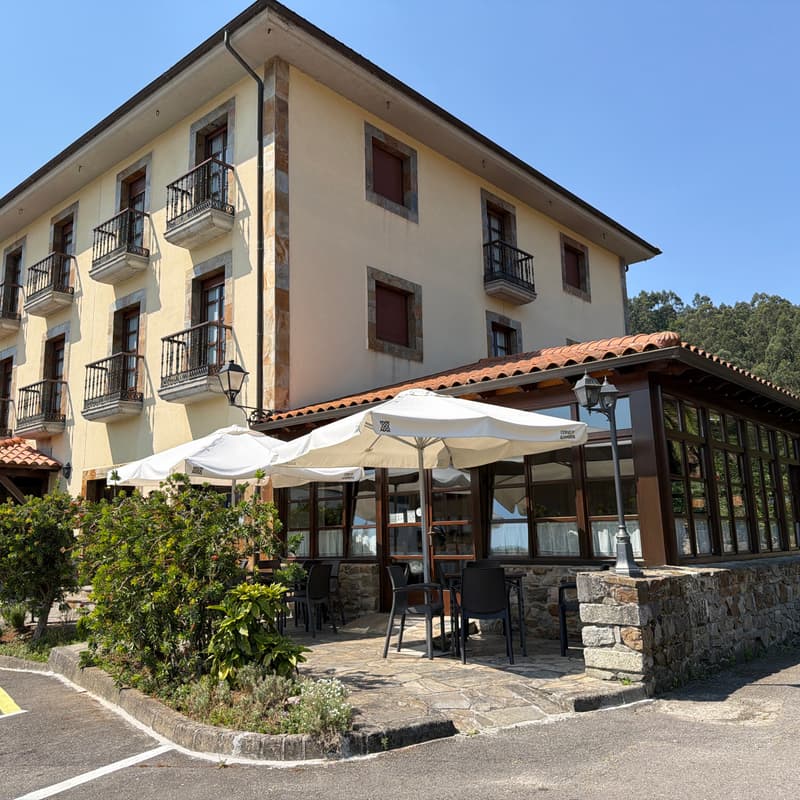
Hotel Valle Las Luiñas stands at an essential crossroads in the village of Soto de Luiña, a long-established staging post in the coastal Asturian municipality of Cudillero. Run as a family enterprise since 1999, the property brings together modern lodging and a traditional Asturian sidrería along the historic Camino del Norte. For long-distance walkers, it represents a key milestone on the trail, situated in the hamlet of Llanorrozo just uphill from the village center and immediately before the pilgrim path splits toward the coast or the mountains.
The hotel takes its name from the surrounding valley and ancient administrative entity known as El Cuarto de Las Luiñas. For centuries, this territory formed part of the historic council of Pravia before gaining its current status under the council of Cudillero during the municipal reorganizations of 1836. The word "Soto" stems from the Latin term for a riverbank woodland or grove, reflecting the fertile, sheltered basin formed by the local streams descending from the coastal mountains toward the Cantabrian Sea.
This stretch of countryside has provided shelter to travelers since the Middle Ages. The earliest recorded evidence of hospital care for pilgrims in Soto de Luiña comes from an inscribed stone dated 1516, marking an early pilgrim hospital that stood alongside a medieval chapel. In the eighteenth century, that primitive site was transformed into the imposing Baroque Church of Santa María and its accompanying Casa Rectoral, an expanded hospital for travelers that today forms part of the Camino del Norte UNESCO World Heritage designation. Notable figures recorded passing through these roads over the centuries include the Flemish knight Antoine de Lalaing in 1501 and Polish nobleman Jakub Sobieski in 1611. The village itself holds a distinct civic pedigree, having earned a Europa Nostra heritage award in 1987 and the Prince of Asturias Exemplary Village Award in 1992.
The hotel features exterior-facing guest rooms finished with hardwood floors, private balconies looking out across the valley, en-suite bathrooms, and central heating. It operates as an accommodating base for self-powered travelers, offering private outdoor parking, secure vehicle garages, bicycle-friendly accommodations, and acceptance of Camino luggage-transfer services. On the ground floor, the attached Mesón Sidrería functions as both a lively neighborhood tavern and a dining room serving Asturian staples. The kitchen centers on regional cooking suited for cold weather and long hiking days, preparing slow-cooked fabada asturiana, hearty cabbage-and-bean pote de berzas, seasonal bonito en rollo, and octopus with prawns.
Dining in the sidrería provides an authentic look at Asturian cider ritual. Natural cider here is poured from an arm's height above the head in an act called the escanciado, which aerates the beverage against the rim of the glass. The resulting pour, or culín, should be swallowed immediately while the natural carbonation remains lively, leaving a tiny drop at the base to rinse the drinking edge.
Guests with an afternoon to spare can make the two-kilometer detour north to the broad sands of Playa de San Pedro de la Ribera. Hikers walking onward the following morning should make their navigation plan before departure: right outside Llanorrozo, the route bifurcates. The Camín de Las Ballotas skirts the cliffs and passes through small coastal hamlets, while the mountain route across the Sierra de las Palancas climbs over open ridges with dramatic views but offers no water sources or settlements for eleven kilometers.
Website
http://www.hotelvalle.org/
Location
Soto de LuiñaRestaurante Sidrería Valle Las Luiñas, Carretera Llovio - Canero, Llanurrozu, Soto de Luiña, Cudillero, Asturias, 33156, Spain
Compare the rest of the places to stay in Soto de Luiña on the map.
Your saved Camino opens in the app with every town, date and stay exactly as you left it, and keeps working when the signal does not.