There Is No "Best" Camino. Only the Best One for You.
The Camino de Santiago is not a single trail. It is a network of ancient pilgrimage routes that all lead to the Cathedral of Santiago de Compostela in northwestern Spain, where the remains of the Apostle Saint James are said to rest. Pilgrims have been walking these paths for over a thousand years, and today the tradition is more alive than ever. In 2025, over 530,000 pilgrims received their Compostela certificate in Santiago, a 6% increase over 2024 and nearly double the number from a decade ago.
If you are reading this, you have probably already decided to walk the Camino. The harder question is: which route?
Whether you are a first-time pilgrim dreaming of your debut Camino or a returning walker looking for your next challenge, this guide is here to help. We cover nine of the most popular and rewarding Camino routes, breaking down each one by distance, duration, difficulty, crowd levels, terrain, and personality. Some are perfect for beginners with limited time. Others are designed for experienced walkers seeking solitude and physical challenge. A few do not even end in Santiago at all.
Read on to find the route that fits your time, your fitness, and your spirit. Or, if you want a shortcut, try our Find Your Route tool to get a personalised recommendation in just a few clicks.
Quick Comparison: All 9 Routes at a Glance
Before we dive into each route, here is a snapshot to help you compare. Distances and durations are based on the most common starting points.
Camino Frances | 780 km | 30 to 35 days | Moderate | High crowds | The classic
Camino Portugues Central | 240 km from Porto | 10 to 12 days | Easy to moderate | Moderate crowds | Best short classic
Camino Portugues Coastal | 270 km from Porto | 12 to 14 days | Easy to moderate | Moderate crowds | Beaches and boardwalks
Le Puy (Chemin du Puy) | 736 km | 4 to 5 weeks | Moderate to hard | Low to moderate crowds | The French Camino
Camino del Norte | 825 km from Irun | 32 to 36 days | Hard | Low to moderate crowds | Wild northern coast
Camino Primitivo | 315 km from Oviedo | 12 to 14 days | Hard | Low crowds | The original, toughest route
Via de la Plata | 1,000+ km from Sevilla | 6 to 8 weeks | Very hard | Very low crowds | Epic south-to-north crossing
Camino Ingles | 119 km from Ferrol | 5 to 6 days | Moderate | Low to moderate crowds | Shortest qualifying route
Fisterra and Muxia | 90 km from Santiago | 3 to 5 days | Easy to moderate | Moderate crowds | The only route starting from Santiago
Keep in mind that "difficulty" depends on more than just elevation. Heat, services, stage length, and terrain type all play a role.
Camino Frances: The Classic First Camino
The Camino Frances is where it all begins for most pilgrims. Starting in Saint-Jean-Pied-de-Port on the French side of the Pyrenees, it crosses approximately 780 km of northern Spain through Navarra, La Rioja, Castilla y Leon, and Galicia before arriving in Santiago de Compostela. It typically takes 30 to 35 days to complete.
This is the most popular route by a significant margin. In 2025, nearly half of all pilgrims who received a Compostela had walked the Frances. That popularity means excellent infrastructure: well-marked trails, abundant albergues, frequent cafes and restaurants, and luggage transfer services on every stage. You will never feel lost, and you will rarely walk alone.
The landscape changes dramatically over the course of the journey. You begin with the dramatic crossing of the Pyrenees, descend into the vineyards of Navarra and La Rioja, cross the vast and meditative Meseta plains of central Spain, and finish through the lush green hills of Galicia. Major cities along the route include Pamplona, Burgos, and Leon, each offering rich cultural experiences and rest days.
Best for: First-time pilgrims looking for a well-supported and social Camino experience. Also ideal for anyone wanting the "full" traditional pilgrimage.
Good to know: The final 100 km from Sarria is the most popular section, walked by around 32% of all pilgrims. If you want a quieter experience on the Frances, consider starting from Saint-Jean or another point further from Santiago.
Camino Portugues Central: The Best Short Classic
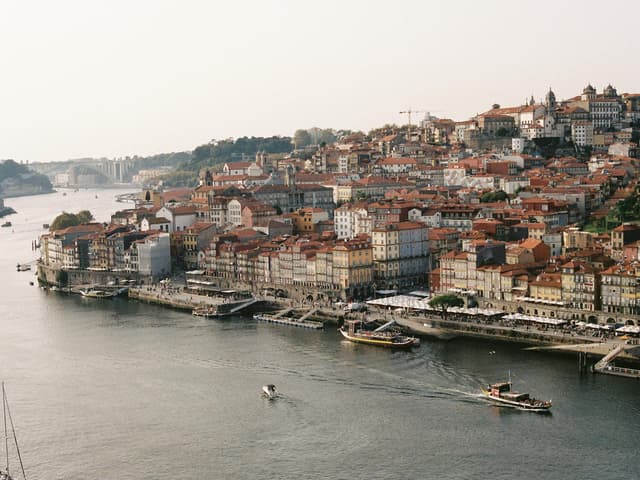
The Camino Portugues Central is the second most popular route to Santiago, and for good reason. Starting from Porto in northern Portugal, it covers around 240 km in 10 to 12 walking days. If you are starting from Lisbon, the full route is approximately 620 km. However, the stretch from Lisbon to Porto has limited pilgrim infrastructure compared to the northern section, which is why most pilgrims begin in Porto.
This route offers a gentler introduction to the Camino than the Frances. The terrain is mostly flat with gentle hills, passing through historic Portuguese towns, Roman bridges, and lush agricultural landscapes before crossing into Spain at Tui. The final section through Galicia shares the beauty and hospitality of other Spanish Camino routes.
The Central Portugues has a strong pilgrim tradition dating back to the 12th century and was supported by the Portuguese Crown. You will walk through towns like Barcelos, Ponte de Lima, Tui, Pontevedra, and Padron, where legend says the Apostle's body was first brought ashore. Accommodation is plentiful, and the route is well marked.
Best for: Pilgrims with 10 to 14 days who want a complete Camino experience on a shorter route. Also great for first-timers who prefer a quieter alternative to the Frances.
Good to know: The last 100 km from Tui qualifies for the Compostela and takes around 5 to 7 days. This is a popular option for those with limited time.
Camino Portugues Coastal: Beaches, Boardwalks, and Atlantic Breeze
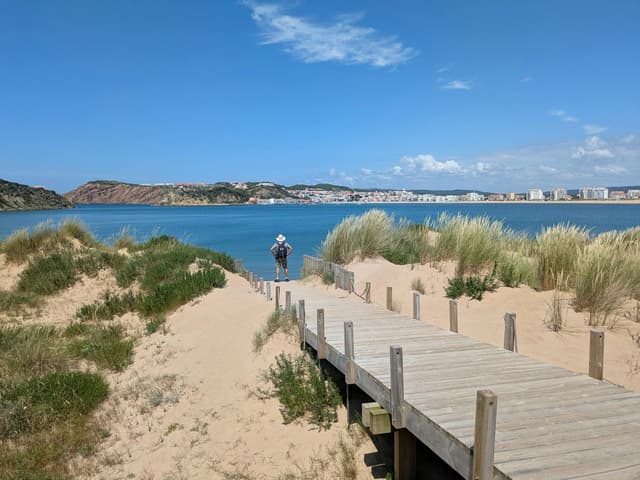
If the idea of walking along the Atlantic coast appeals to you, the Camino Portugues Coastal (Camino da Costa) is one of the most scenic routes to Santiago. Starting from Porto, it covers approximately 270 km in 12 to 14 days, following the coastline through fishing villages, sandy beaches, and seaside promenades before turning inland toward Santiago.
This route has seen explosive growth in recent years. In 2024, over 74,000 pilgrims completed the Coastal Portugues, a jump of more than 40% compared to the previous year, making it one of the fastest-growing Camino routes. The terrain is mostly flat, with boardwalks, beach paths, and coastal roads making up much of the walking surface.
The Coastal route runs parallel to the Central Portugues, and the two merge at Redondela in Spain. Many pilgrims choose to combine sections of both, starting on the Coastal route from Porto and switching to the Central at various points. There is also the Spiritual Variant (Variante Espiritual), a detour just north of Pontevedra that includes a boat crossing of the Ria de Arousa, retracing the legendary route of the Apostle's remains.
Best for: Pilgrims who love coastal scenery and want a physically gentle route. Also suits those who want to combine two routes in one trip.
Good to know: Because it runs through more built-up towns and cities than the Central route, you will find more dining and accommodation options but also more urban walking sections.
Le Puy (Chemin du Puy): The French Camino
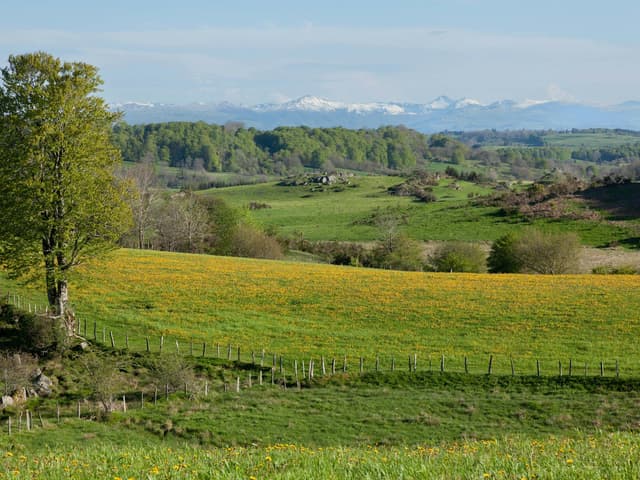
Le Chemin du Puy, also known as the Via Podiensis, is the most popular Camino de Santiago route in France. Starting from the striking pilgrim town of Le-Puy-en-Velay in the Auvergne region of central France, it runs approximately 736 km through southern France before joining the Camino Frances at Saint-Jean-Pied-de-Port in the Pyrenees. Most pilgrims take 4 to 5 weeks to walk the full route.
This is not a route that ends in Santiago. It ends at the starting point of the Camino Frances. Some pilgrims walk Le Puy as a standalone journey through France, while others use it as the opening chapter of a much longer pilgrimage all the way to Santiago (a combined distance of over 1,500 km).
The landscapes are extraordinary and constantly changing: volcanic highlands around Le Puy, the wild and windswept Aubrac plateau, the medieval gem of Conques, the Lot River valley, the vineyards of Armagnac country, and finally the foothills of the Pyrenees. The route is a UNESCO World Heritage Site and is marked as the GR65 with the familiar red and white stripes of the French Grande Randonnee trail network.
Accommodation along Le Puy is typically in gites, small family-run pilgrim guesthouses that often include evening meals and communal breakfasts. This creates a uniquely social and intimate experience that is distinctly French.
Best for: Pilgrims who want a culturally rich French walking experience, or who plan to walk all the way from France to Santiago over two or more trips. Popular as a shorter section walk too, especially Le Puy to Conques (about 200 km in 10 days).
Good to know: The walking season runs from mid-April to mid-October. Food options along the trail can be limited in rural areas, especially on Sundays and Mondays when shops close. Carry snacks and water.
Camino del Norte: Spain's Wild Northern Coast
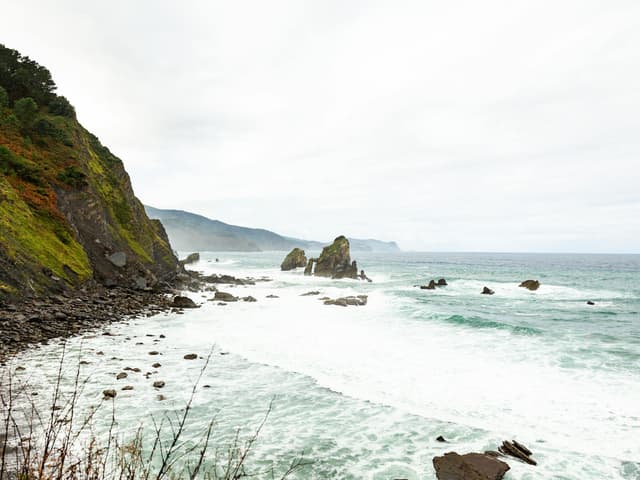
The Camino del Norte follows Spain's dramatic northern coastline from Irun on the French border to Santiago de Compostela, covering approximately 825 km over 32 to 36 walking days. It is the second longest of the main Spanish Camino routes and is chosen by around 7% of pilgrims.
Despite its name suggesting a purely coastal walk, the Norte actually spends a lot of time inland. Some days you will walk along cliffs and beaches with spectacular ocean views. Other days you will not see the sea at all. The route passes through major cities including San Sebastian, Bilbao, Santander, and Gijon, as well as charming coastal towns like Comillas, Ribadesella, and Luarca. The Basque Country section is particularly beautiful, with steep green hills, pintxo bars, and a distinct cultural identity.
The Norte is notably harder than the Frances. The early stages through the Basque Country involve steep coastal climbs, and the overall route has more elevation gain than most other Caminos. Services and albergues are less frequent in some sections, and the weather on Spain's northern coast can be unpredictable, with rain possible at any time of year.
Best for: Experienced walkers who want fewer crowds, coastal scenery, exceptional gastronomy (particularly Basque and Galician cuisine), and do not mind a physical challenge. Also a strong choice for returning pilgrims who have already walked the Frances.
Good to know: The Norte shares its final stages with the Camino Primitivo, which joins from Oviedo. Many pilgrims combine sections of both routes. The summer months (July and August) are the most popular but also the busiest and warmest.
Camino Primitivo: The Original and Toughest Route
The Camino Primitivo holds a special place in Camino history. It is considered the oldest of all the Camino de Santiago routes, dating back to the 9th century when King Alfonso II of Asturias became the first known pilgrim to walk to Santiago after the discovery of the Apostle's tomb. That makes this route quite literally "the original Camino."
Starting from the cathedral in Oviedo, capital of Asturias, the Primitivo covers approximately 315 km over 12 to 14 walking days before reaching Santiago. It merges with the Camino Frances at the town of Melide, about 55 km from Santiago. Though shorter than many other routes, it is widely regarded as the most physically demanding Camino due to its mountainous terrain, with continuous steep ascents and descents through the remote hills of Asturias and Galicia.
Much of the route runs above 800 metres, with few stretches on asphalt, making it one of the most natural and unspoiled Camino experiences available. The Hospitales route, an alternative high-ridge path between Borres and Grandas de Salime, is one of the most dramatic and exposed sections on any Camino. Despite its difficulty, the Primitivo has a surprisingly good network of albergues throughout.
In 2025, around 4% of pilgrims who arrived in Santiago had walked the Primitivo. It attracts a different kind of pilgrim: those who seek solitude, challenge, and a deep connection with the landscape.
Best for: Fit and experienced walkers who want a tough, rewarding Camino with low crowds and spectacular mountain scenery. Also ideal for those interested in the historical origins of the pilgrimage.
Good to know: The Primitivo can be combined with the Camino de San Salvador (Leon to Oviedo), creating a connection from the Frances to the Primitivo for pilgrims who want to link two routes.
Via de la Plata: The Epic South-to-North Crossing
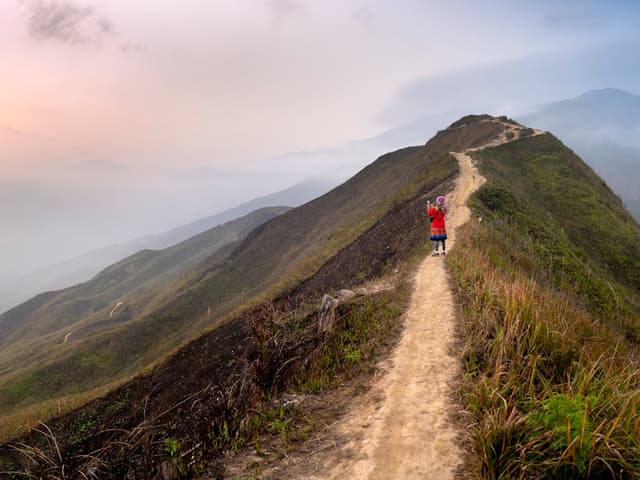
If you want the longest, most solitary, and arguably most challenging Camino, the Via de la Plata is it. Starting in Sevilla in southern Spain, this ancient route follows old Roman roads north through Extremadura, Castilla y Leon, and into Galicia, covering over 1,000 km on foot. Most pilgrims take 6 to 8 weeks to complete the full journey.
At the town of Granja de Moreruela in Zamora, the route splits. One option continues north to Astorga, where it joins the Camino Frances for the final stages to Santiago. The other option (the Camino Sanabres) heads northwest through Ourense directly to Santiago. Both options are roughly similar in total distance.
The Via de la Plata is a route of contrasts. You begin in the warmth of Andalusia, walking past Roman ruins in Italica and through the UNESCO World Heritage cities of Merida, Caceres, and Salamanca. The route then crosses vast, sparsely populated landscapes where towns can be 20 to 25 km apart with nothing in between. In 2025, only about 1.6% of pilgrims who arrived in Santiago had walked this route.
The greatest challenges are the extreme heat (especially if walking in summer), the long distances between services, and the need to carry extra water and supplies. This is not a route for your first Camino, but for experienced long-distance walkers, it offers an unmatched sense of accomplishment and deep immersion in Spain's history.
Best for: Experienced, self-sufficient walkers who want a truly epic, solitary pilgrimage. Ideal for those fascinated by Roman history and who want to experience four distinct regions of Spain.
Good to know: Avoid walking in July, August, and September due to extreme heat across the southern stages. March, April, May, and October are the recommended months. Consider starting in Salamanca if the full route feels too ambitious.
Camino Ingles: The Shortest Qualifying Route
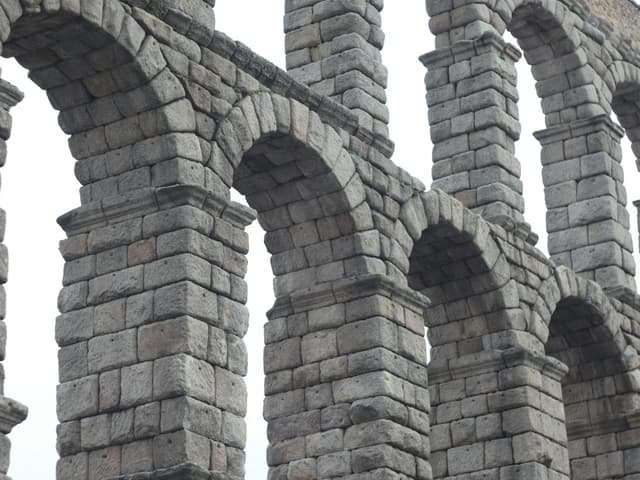
If you only have a week, the Camino Ingles might be your perfect Camino. Starting from the port city of Ferrol on Spain's northern Galician coast, this route covers approximately 119 km to Santiago de Compostela in 5 to 6 walking days. It is the shortest route that qualifies for the Compostela certificate (which requires a minimum of 100 km on foot).
The Camino Ingles takes its name from the medieval English, Irish, and Scandinavian pilgrims who arrived by ship at Ferrol and A Coruna and continued their journey to Santiago on foot. The earliest documented sea pilgrimages date back to the 12th century, with records of English Crusaders landing at Ferrol in 1147.
The route passes through coastal towns like Pontedeume and the charming medieval town of Betanzos before turning inland through quiet Galician countryside and eucalyptus forests. The terrain is hilly with daily ascents and descents of around 300 metres, but there are no extreme challenges. In 2024, over 28,000 pilgrims completed this route.
There is also an alternative start from A Coruna (75 km), but this does not meet the 100 km minimum for the Compostela unless you can prove additional qualifying distance from a linked route.
Best for: Pilgrims with limited time who still want a complete, authentic Camino experience that ends at the Cathedral in Santiago. Also great as a taster trip for those considering a longer Camino in the future.
Good to know: Despite being short, the Ingles has fewer albergues than longer routes. Booking accommodation ahead is recommended in peak season, especially in summer.
Camino Fisterra and Muxia: Walking to the End of the World
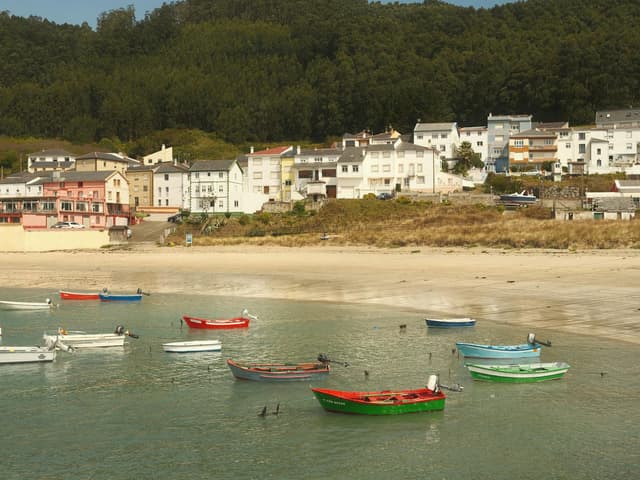
The Camino to Fisterra and Muxia is unlike every other route on this list. It is the only Camino that starts in Santiago de Compostela rather than ending there. For many pilgrims, arriving at the Cathedral is not the end. The journey continues west to Cape Fisterra (Finisterre in Castilian), which the Romans believed was the westernmost point of the known world: literally, the "end of the earth."
From Santiago, the route to Fisterra covers approximately 90 km over 3 to 4 walking days, passing through the Galician countryside and the town of Negreira before reaching the dramatic Atlantic coast. From Fisterra, you can continue along the coast another 28 km to the fishing village of Muxia, where the Sanctuary of A Virxe da Barca sits on the rocks above the sea. Walking both destinations totals around 115 to 120 km.
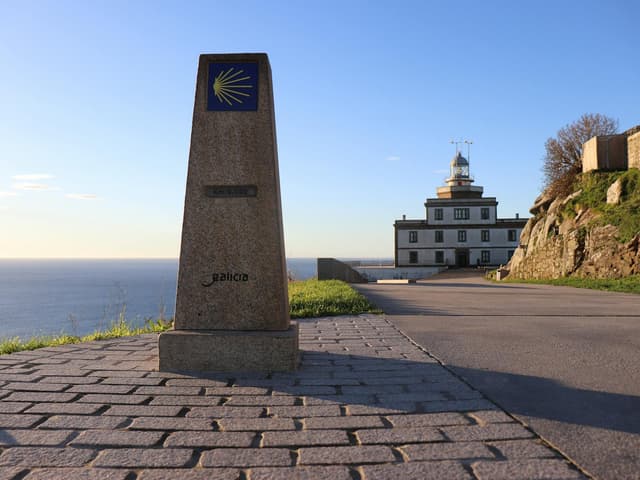
At Fisterra, the tradition is to watch the sunset from the lighthouse at the cape, where the famous 0.0 km marker stands. Some pilgrims burn a piece of clothing or their walking shoes as a symbolic act of transformation. At the lighthouse, you receive the Fisterrana certificate (and the Muxiana if you walk to Muxia), a companion to the Compostela you already received in Santiago.
Best for: Pilgrims who want to extend their Camino after arriving in Santiago. It works as a beautiful and reflective finale to any route. Also ideal as a standalone short walk for those already in Santiago.
Good to know: You do not receive a Compostela for this route (since you are walking away from Santiago), but the Fisterrana and Muxiana certificates are treasured keepsakes. The route can also be walked in reverse, from Muxia or Fisterra to Santiago.
How to Choose: Questions to Ask Yourself
Still not sure which route to pick? If you would rather skip the reading and get a personalised answer, head over to our Find Your Route tool. It asks a few quick questions about your time, fitness, and preferences, then recommends the best Camino route for you. Otherwise, here are some practical questions to guide your decision.
How much time do you have? If you have less than a week, the Camino Ingles (5 to 6 days) or the Fisterra/Muxia route (3 to 5 days) are your best options. With 10 to 14 days, look at the Portugues Central, Portugues Coastal, or Primitivo. For a month or more, the Frances, Norte, or Le Puy open up. The Via de la Plata requires 6 to 8 weeks.
What is your fitness level? If you are new to long-distance walking, start with the Portugues Central, Coastal, or Ingles. The Frances is manageable for most fit adults. The Norte and Primitivo require good fitness and ideally some hiking experience. The Via de la Plata demands the most self-sufficiency and endurance.
Do you prefer company or solitude? The Frances offers the most social experience, with pilgrims from all over the world. The Portugues routes are sociable but calmer. The Primitivo, Norte, and Via de la Plata offer progressively more solitude.
What kind of scenery excites you? Coastal views point to the Norte, Portugues Coastal, or Fisterra. Mountain landscapes suit the Primitivo or the Pyrenees crossing on the Frances. Rolling French countryside belongs to Le Puy. Wide open plains and Roman history define the Via de la Plata. Green forests and rolling hills are the hallmark of the Ingles.
Is this your first Camino or a return trip? First-timers often thrive on the Frances, Portugues Central, or Ingles. Returning pilgrims frequently choose the Norte, Primitivo, or Le Puy for a different challenge and perspective.
Planning Your Camino: Next Steps
Once you have chosen your route, the real planning begins. Here are a few things to think about as you prepare.
When to walk: The most popular walking season across all routes is April to October, with May, June, and September offering the best balance of weather and crowd levels. The Via de la Plata should be avoided in July and August due to extreme heat. The Le Puy route operates on a season from mid-April to mid-October.
Getting your Compostela: To receive the Compostela certificate in Santiago, you must walk at least 100 km (or cycle at least 200 km) and collect at least two stamps per day in your pilgrim credential. The credential can be obtained at your starting point or ordered in advance.
Accommodation: Most Camino routes offer a mix of municipal albergues (pilgrim hostels, often under 15 euros per night), private albergues, pensions, and hotels. On less popular routes like the Via de la Plata, options may be limited and advance planning is recommended. Browse all your options on our accommodation page.
What to carry: Pack light. Most experienced pilgrims carry 7 to 10 kg including water. Luggage transfer services are available on most routes, allowing you to walk with just a daypack. Visit our gear page for buying guides on footwear, backpacks, and everything else you need.
Get answers: Our FAQ covers 49 of the most common Camino questions. For deeper reading, explore our articles on accommodation types, costs, and more.
In the meantime, if you have not already, try our Find Your Route tool to discover which Camino is the best fit for you.
Buen Camino!